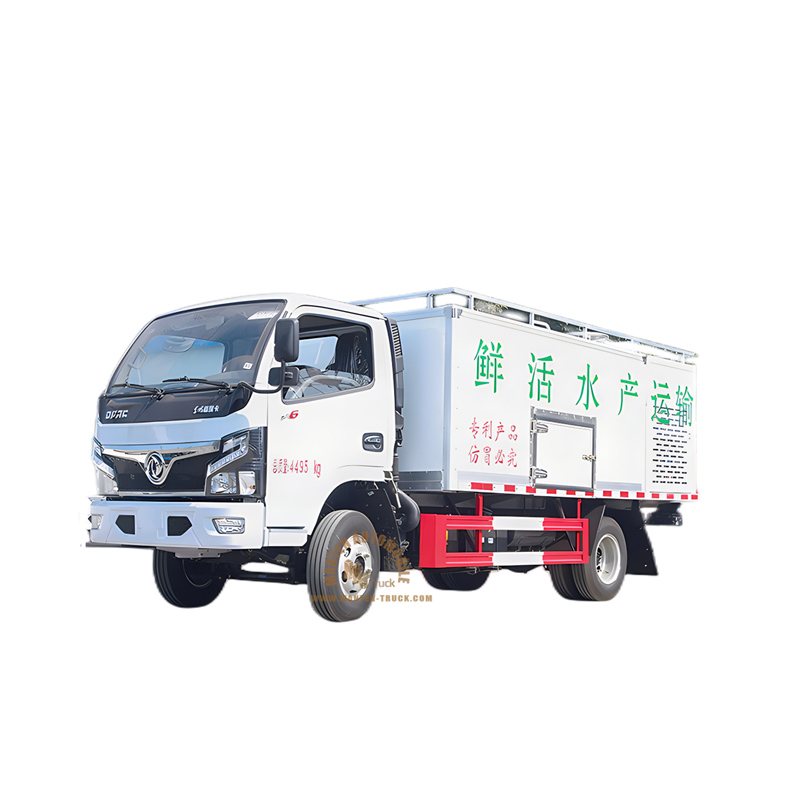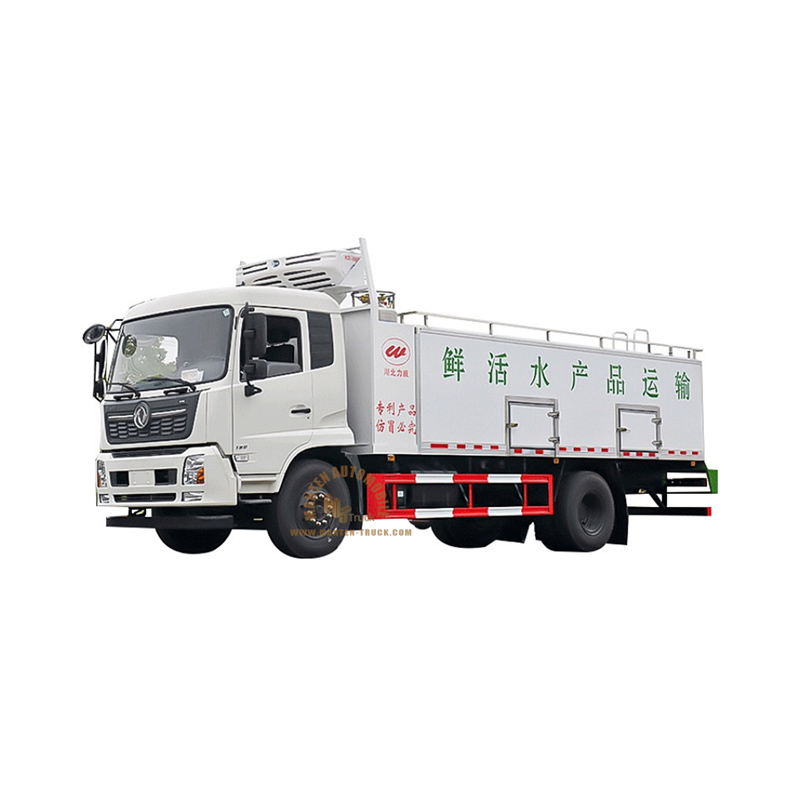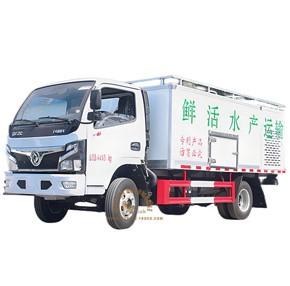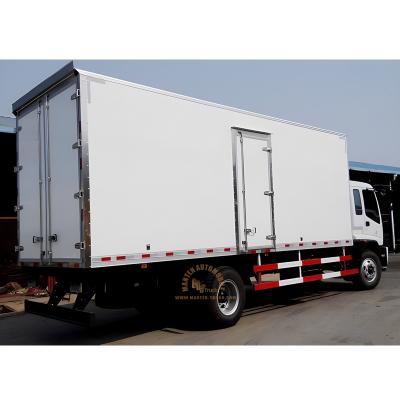
The seafood industry has undergone significant transformations throughout history, revolutionizing the way fish and other seafood products are transported and delivered to consumers worldwide. One remarkable innovation that has played a crucial role in this evolution is the fish carrier truck. In this blog post, we will delve into the history, development, industry impact, and market dynamics of fish carrier trucks, highlighting their vital role in ensuring the freshness and quality of seafood.
Before the advent of fish carrier truck, the seafood industry heavily relied on traditional methods of transportation, such as wooden barrels filled with ice and salt, to keep fish fresh during transit. However, as the demand for seafood grew and distribution distances increased, the need for a more efficient and reliable solution became evident.
The first fish carrier trucks emerged in the early 20th century, leveraging advancements in refrigeration technology. These early trucks featured insulated compartments and ice-cooling systems, allowing for the transportation of fresh fish over long distances. This marked a significant turning point, enabling seafood to reach far-flung markets without compromising its quality.
Over the years, fish carrier trucks have undergone remarkable developments, incorporating state-of-the-art technologies to ensure optimal conditions for seafood transportation. Traditional ice-based cooling systems have been replaced by advanced refrigeration units that can maintain precise temperature and humidity levels, preserving the freshness and quality of the catch.
Additionally, innovations in truck design have focused on optimizing space utilization and improving the overall safety of the fish during transit. Fish transport truck for sale now feature customizable compartments and secure storage systems to prevent movement and damage to the cargo, minimizing the risk of spoilage.
The introduction of live fish transport vehicle has had a profound impact on the seafood industry. Previously, limited regional availability and seasonality greatly influenced the availability of fresh seafood. However, with the ability to transport fish over longer distances, fish carrier trucks have expanded the reach of seafood suppliers, enabling consumers to access a wider variety of fresh catch throughout the year.
Moreover, the development of reliable transportation infrastructure and the growth of international trade have led to increased market opportunities for seafood producers. Fish carrier trucks have played a vital role in facilitating this expansion by ensuring the safe and efficient delivery of seafood products to domestic and international markets, bolstering economic growth within the industry.
The live fish transport truck market has experienced substantial growth in recent years, driven by rising consumer demand for fresh and sustainably sourced seafood. As consumers become increasingly aware of the health benefits associated with seafood consumption, the need for efficient transportation methods to preserve its quality becomes paramount.
Furthermore, stringent regulations and industry standards pertaining to food safety and quality control have further fueled the demand for advanced fish carrier trucks. This has prompted manufacturers to continuously innovate, develop more energy-efficient models, and enhance insulation systems to comply with regulatory requirements while reducing environmental impact.
In terms of market segmentation, fish carrier trucks cater not only to large-scale seafood suppliers but also to smaller local fishermen and fishmongers who need reliable transportation solutions for smaller quantities of seafood. This diversified market landscape offers opportunities for both established manufacturers and emerging players to meet the evolving demands of the industry.
The evolution of fish transport truck has revolutionized the seafood industry, enabling the transportation of fresh fish and seafood products over long distances while maintaining their quality and freshness. Through technological advancements and a growing market, fish carrier trucks have played a vital role in connecting seafood producers with consumers worldwide, supporting the growth of the industry and promoting sustainable seafood practices. As the industry continues to evolve, fish carrier trucks will remain a crucial component in meeting the increasing demand for fresh and high-quality seafood.
Best Practices and Key Considerations for Operating Slurry Seal TruckDecember 24, 2025The slurry seal truck has become an essential piece of equipment for modern pavement preservation, offering an efficient way to extend road life while minimizing costs. As Manten continues its mission...view
Trucking: What You Need to Know About TruckingSeptember 30, 2022What is trucking?When it comes to the road transport of goods by motor vehicles, the trucking sub-sector is responsible for the transport. This sub-industry can be divided into Specialty Freight and G...view
Logistics Trucks And TrailersSeptember 30, 2022Each truck has its own capacity, which means transporters must carefully choose how they transport their cargo. This also affects the profit margins of the transporters, so they must know which option...view
Record the Delivery of 30sets of Sewage Suction Semi Trailer Export to Namibia.May 31, 2024For the Namibia government tender, MANTEN won the bids in the end of year 2023. We have arranged production and shipment for the first batch timely as the contract.The Sewage Suction Semi Trailer are ...view
How to Find The Right Aerial Fire Engine for A City FireSeptember 30, 2022To support the needs of the city community and, where applicable, to support mutual assistance in neighboring cities, Fire Department Procurement Representatives have a number of equipment options to ...view
Height and Functions of Aerial Ladder Fire TruckApril 19, 2023With the aerial ladder fire trucks gradually being distributed to grass-roots units, the ability to rescue high-rise building fires has been further improved. However, the aerial ladder fire truck is ...view